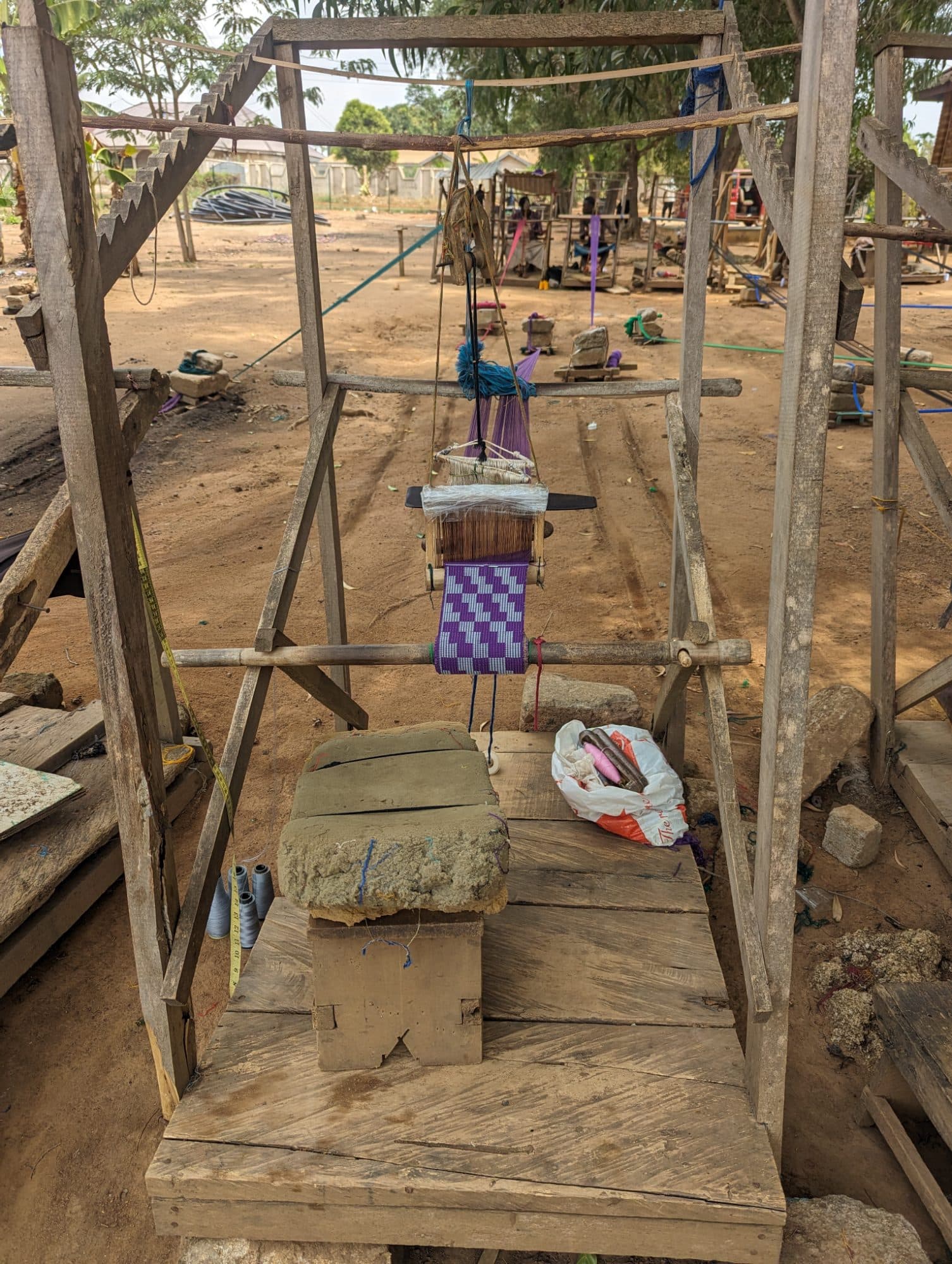
In 2024, UNESCO inscribed the craftsmanship of Kente, Ghana's traditional woven textile, on its Representative List of the Intangible Cultural Heritage of Humanity. The recognition celebrated knowledge that has been passed from weaver to weaver for generations: patterns, colours, techniques and the meanings attached to them.
It also raises a question that anyone documenting community knowledge must face. When knowledge is written down, photographed, recorded or placed in an archive, who controls it afterwards? Documentation can protect knowledge from being lost. Done carelessly, it can also move that knowledge out of the hands of the people who hold it — into files, databases and publications they cannot access, shape or benefit from.
This note sets out what Ghanaian law and international standards already say, and the practical commitments that follow.
What Ghanaian law already recognises
Ghana was an early mover in treating folklore as a collective inheritance. Under the Copyright Act, 2005 (Act 690), the rights in folklore are vested in the President on behalf of, and in trust for, the people of Ghana. The Act establishes a National Folklore Board to document, promote and protect works of folklore, and requires anyone who wishes to use folklore commercially to obtain authorisation and pay the required fees, which support the preservation of folklore and local arts.
Commentators have debated whether this arrangement always serves the specific communities from which folklore comes. But the principle is clear: community knowledge is not simply free raw material for whoever records it first.
Personal information gathered in the course of documentation is also protected. The Data Protection Act, 2012 (Act 843) sets out principles for collecting and processing personal data, including consent and purpose limitation. Recordings of named individuals, their voices and their stories fall within its scope.
What international standards add
Ghana ratified the 2003 UNESCO Convention for the Safeguarding of the Intangible Cultural Heritage on 20 January 2016. The Convention places communities, groups and individuals at the centre of safeguarding. It emphasises their participation and consent, and respect for customary practices that govern access to particular aspects of heritage.
In research and data practice, the CARE Principles for Indigenous Data Governance, published in 2020, offer a widely used framework:
- Collective benefit — data and documentation should benefit the communities concerned.
- Authority to control — communities have a right to govern how knowledge about them is collected, stored and used.
- Responsibility — those who hold the data are accountable to the communities.
- Ethics — people's wellbeing and rights come first at every stage.
Seven commitments for responsible documentation
Drawing these sources together, RFI proposes seven working commitments for any documentation of community knowledge:
- Consent is a process, not a signature. Participants should understand what is being recorded, why, and where it will go, and be able to revisit their decision as the work develops.
- Communities decide what stays private. Sacred, private, medicinal or otherwise restricted knowledge should not be recorded or published without explicit approval from those with authority to give it.
- Agree the rules before recording begins. Storage, access, attribution, publication and future use should be settled at the start, in language everyone understands.
- Return what is recorded. Communities should receive copies of approved materials in formats they can use — audio, print or local-language summaries, not only academic outputs.
- Name the knowledge holders. Where people wish to be credited, their contribution should be acknowledged clearly and fairly.
- Allow withdrawal. Participants should be able to withdraw statements or identify material that must not be published.
- Do not romanticise. Not every inherited practice is beneficial or appropriate to revive. Respectful documentation still allows for critical reflection, including on questions of gender, age, power and exclusion.
Why this matters now
Digital tools make it easier than ever to record and share knowledge — and easier to lose control of it. A photograph posted online, a transcript in a shared drive or a dataset used to train software can travel far beyond the setting in which it was offered.
The aim is not to lock knowledge away. It is to make sure that preservation strengthens the people who hold knowledge rather than replacing them. Documentation done well should leave a community with more control over its heritage, not less.
Sources
- UNESCO Intangible Cultural Heritage, "Ghana" (ratification of the 2003 Convention on 20 January 2016; Craftsmanship of traditional woven textile Kente, inscribed 2024)
- Copyright Act, 2005 (Act 690), Republic of Ghana. WIPO Lex
- Data Protection Act, 2012 (Act 843), Republic of Ghana. Full text (PDF), National Communications Authority
- UNESCO, Convention for the Safeguarding of the Intangible Cultural Heritage (2003)
- Carroll, S. R., Garba, I., Figueroa-Rodríguez, O. L., et al. (2020). "The CARE Principles for Indigenous Data Governance." Data Science Journal, 19(1), 43
- The Conversation, "Ghana's copyright law for folklore hampers cultural growth" (2019)