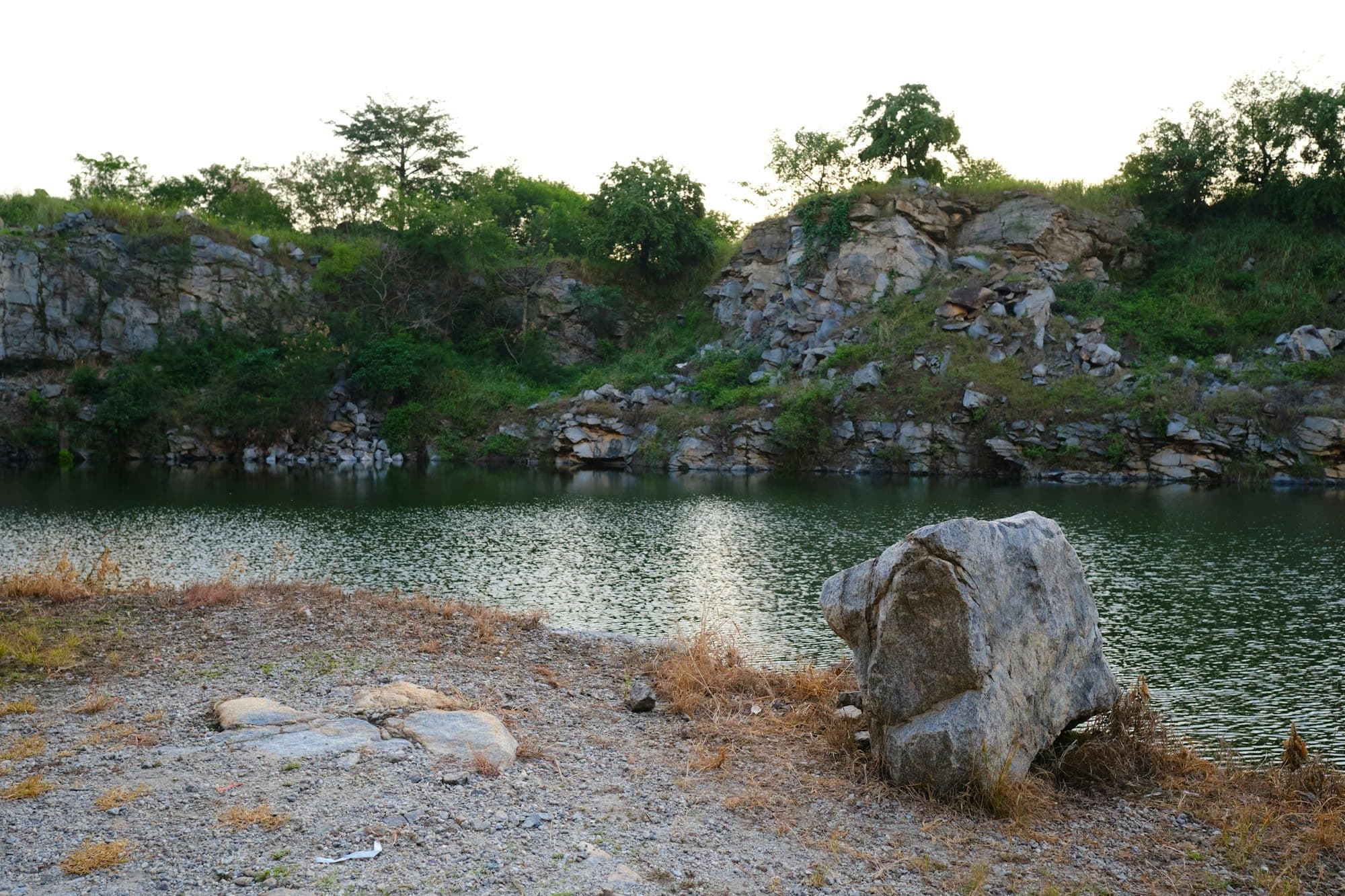
On Tuesday, 19 March 2024, the raw water arriving at the Sekyere Hemang treatment plant in Ghana's Central Region measured 13,000 nephelometric turbidity units (NTU). The Ghana Water Company's regional chief manager told reporters that at such a level the plant would normally have to shut down. Instead, the company cut production by 30 per cent and quadrupled the chemicals it used to make the water drinkable. For comparison, World Health Organization guidance says well-run treatment systems should deliver water with a turbidity below 1 NTU.
The immediate cause is well known. The River Pra, which feeds the plant, has been heavily affected by illegal small-scale gold mining, known in Ghana as galamsey. As early as 2017, the Water Resources Commission warned that about 60 per cent of the country's water bodies were polluted, with illegal mining among the leading causes.
It would be easy to stop there: a harmful activity, a damaged river, a need for enforcement. But the story of the Pra is also a story about relationships, and that is what we mean when we speak of relational futures.
A river is a set of relationships
Consider who and what is connected to that single reading of 13,000 NTU.
A young man digging for gold upstream may be responding to a lack of other work, to the price of gold, or to debts incurred in farming. The landholder who leased him the plot may be weighing an immediate payment against the long-term fertility of the soil. The buyer who purchases his gold is linked to regional and international markets. Downstream, a treatment plant spends more on chemicals, which eventually becomes a cost carried by public finances or by households. Families who cannot rely on piped water turn to other sources, with consequences for health. Fish, farmland and the river's own ecology absorb damage that will outlast any single mining season.
None of these actors sees the whole picture from where they stand. Each responds sensibly to the pressures and incentives within reach. The harm emerges from the relationships between them.
Why "relational"?
Most policy is organised around separate sectors: mining, water, forestry, health, local government. Each has its own ministry, budget, data and targets. That arrangement is useful, but it has a blind spot. Problems like the one on the Pra do not sit inside any one sector. They move between them.
A relational approach starts by asking a different set of questions:
- What relationships make this situation possible? Between people and land, between communities and authorities, between local livelihoods and global markets.
- Whose knowledge is present, and whose is missing? Farmers, fishers, chiefs, water engineers and young miners each understand a part of the system that others do not.
- What might a response change elsewhere? A crackdown upstream may move activity to another river; a new rule may shift incentives in ways no one intended.
- How does power move through the system? Who can make decisions, who bears the costs, and who is heard?
These are not abstract questions. They determine whether a response holds or simply relocates the problem.
Law, too, is part of the relationship
Institutions change the relationships they govern. In 2022, Ghana passed the Environmental Protection (Mining in Forest Reserves) Regulations, known as L.I. 2462, which opened the way for mining in forest reserves under certain conditions. After sustained public debate and advocacy by civil society, the instrument was revoked; the revocation took effect on 10 December 2025. Whatever one's view of either decision, the sequence shows that the future of a forest or a river is shaped not only on the ground but also in Parliament, in markets and in public argument.
What "futures" adds
The word futures is plural on purpose. There is no single future waiting to arrive. Different paths remain open, and present decisions make some more likely than others. A river can recover or decline; a mining community can be offered viable alternatives or left without them; a water utility can invest in prevention or keep paying rising treatment costs.
Futures thinking asks what those paths look like, what would make each one more likely, and who would benefit or lose along the way. Relational thinking makes sure that the answer includes the people and systems that sit outside any single mandate.
What this means for RFI
Relational Futures Institute exists to bring these two ways of thinking together in practical work. That means:
- starting with the lived realities of communities, not only with administrative categories;
- treating community members, practitioners and officials as holders of different and necessary kinds of knowledge;
- tracing consequences across sectors before recommending action; and
- being honest about uncertainty, trade-offs and the limits of what any one intervention can achieve.
The brown water arriving at Sekyere Hemang is a warning. It is also an invitation to understand our shared problems as the product of relationships — and therefore as problems that relationships, better understood and better governed, can help to solve.
Sources
- Graphic Online, "Illegal mining impacts River Pra: 2 treatment plants in Western, Central regions face shutdown," 23 March 2024
- World Health Organization (2017). Water Quality and Health – Review of Turbidity: Information for regulators and water suppliers
- Pulse Ghana, "60% of Ghana's water bodies polluted – Water Resources Commission" (statement by the Commission's Executive Secretary, May 2017)
- Ghana Business News, "Ghana government revokes controversial mining law L.I. 2462," 19 December 2025
- Mongabay, "Ghana repeals legislation that opened forest reserves to mining," January 2026