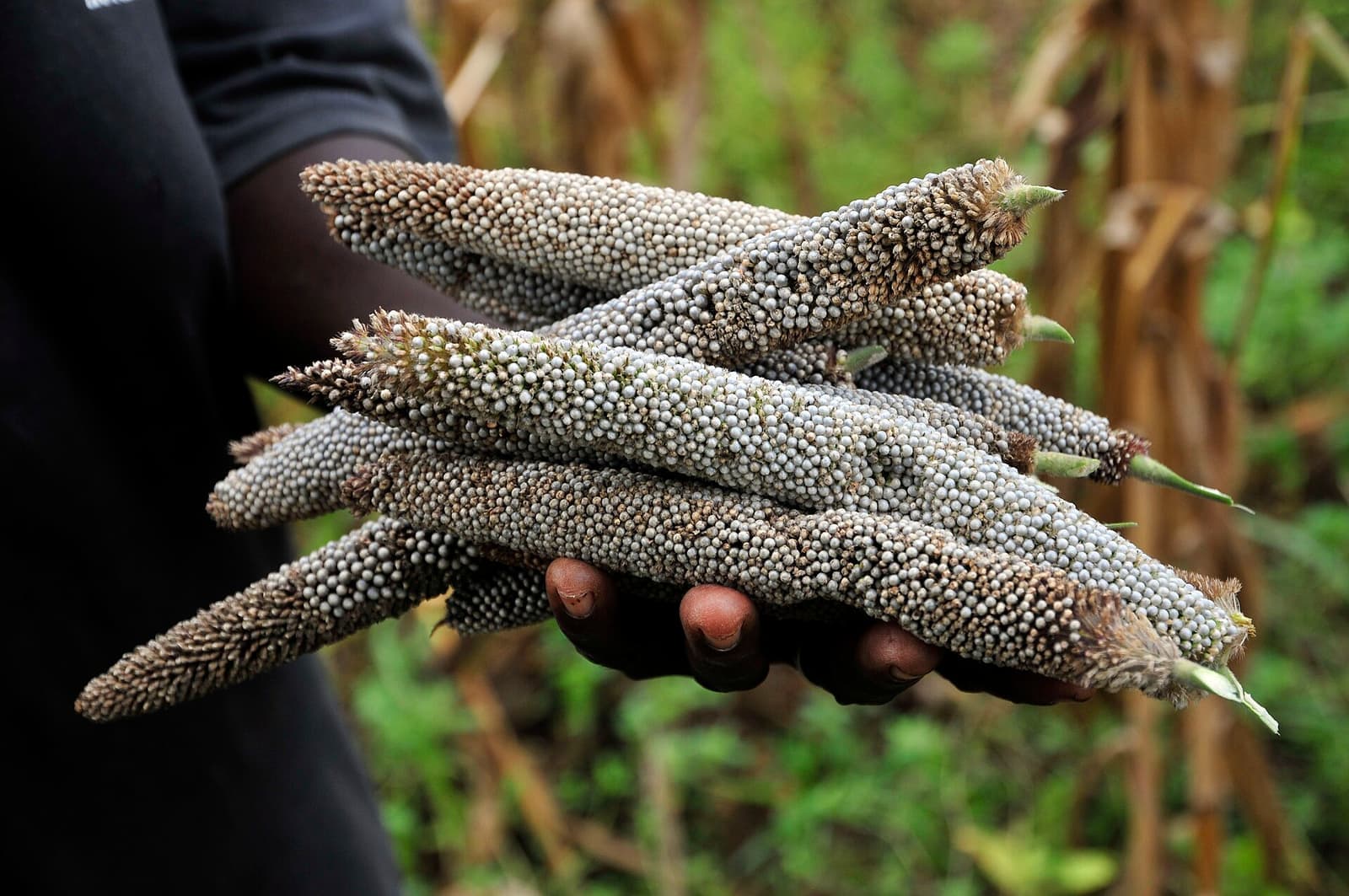
Climate change in Ghana is not experienced evenly. It is felt most sharply in the north, where farming depends almost entirely on rain, where rainfall is erratic and the dry season long, and where food insecurity is already highest. When the rains come late, stop early or break for weeks in the middle of the season, the consequences run quickly from the field to the family table. This working paper reviews the published evidence on what is changing in the climate of northern Ghana, how it affects farmers and food security, how farmers are responding, and what public action has achieved so far.
The paper draws only on published sources: official surveys, World Bank analysis and data, and peer-reviewed research. It does not present new field data. Where the evidence is limited or points in different directions, the paper says so.
Why does the north matter most?
Ghana's five northern regions are Northern, Savannah, North East, Upper East and Upper West. Farming there, as in most of Ghana, depends on rain. The World Bank's Country Climate and Development Report (CCDR) for Ghana notes that agriculture, forestry and fisheries contribute about 20 per cent of GDP and employ 71 per cent of the rural population, that the agriculture sector supplies more than 70 per cent of national food demand, and that only 2 per cent of agricultural land is irrigated. The poorest households are the most dependent on farming: 88 per cent of household heads in the poorest wealth quintile are self-employed in agriculture.
The north is also where food insecurity is concentrated. The 2020 Comprehensive Food Security and Vulnerability Analysis (CFSVA), produced by the Ghana Statistical Service and the Ministry of Food and Agriculture with the World Food Programme, found that 11.7 per cent of Ghana's population, about 3.6 million people, were food insecure. The rate was far higher in the north (Figure 1). Upper East had the highest prevalence of any region, at 49 per cent, followed by North East (33 per cent) and Northern (31 per cent). Upper West and Savannah each recorded 23 per cent. Greater Accra, at 4 per cent, had the lowest.
The same survey shows the north's position from other angles. By ecological zone, food insecurity was highest in the Sudan Savannah (49 per cent) and Guinea Savannah (30 per cent); the Transitional zone recorded 16 per cent and the other five zones less than 10 per cent. By livelihood zone, the highest rate, 45 per cent, was in the north-east zone where households grow millet, sorghum, rice and legumes and keep small ruminants and guinea fowl. Food insecurity was 18.2 per cent in rural areas and 5.5 per cent in urban areas, and 78 per cent of Ghana's food-insecure people lived in rural areas. Households that depend on livestock (30.4 per cent food insecure) and on food crop production (19.7 per cent) had higher rates than other livelihood groups.
Rates and numbers tell slightly different stories. Because the southern regions are more populous, large numbers of food-insecure people also live there. Of the 3.6 million food-insecure people in 2020, 18 per cent lived in Upper East and 17 per cent in Northern Region, but 13 per cent lived in Ashanti. Food insecurity is a national problem; what marks out the north is how large a share of its people it reaches. Within every region, it also follows education and household size. In the survey's statistical tables, 25.5 per cent of households whose head had no schooling were food insecure, compared with 3.7 per cent of those whose head had tertiary education, and 17.8 per cent of households of seven or more people, compared with 11.9 per cent of those with fewer than five.
The north's position is not new. The CFSVA recalls that in 2009, when about 5 per cent of Ghanaians were classed as food insecure, roughly 38 per cent of them, some 453,000 people, lived in the then Upper West, Upper East and Northern regions.
A note of caution is needed about more recent figures. The Ghana Statistical Service's 2024 household survey reported that the number of food-insecure Ghanaians rose from 12.4 million in the first quarter of 2024 to 13.3 million in the fourth. That survey measures food insecurity differently, and its figures are far higher than the CFSVA's, so the two cannot be compared directly. Its press release reports the highest regional rate in Volta (52 per cent in the fourth quarter) and the lowest in Greater Accra (29 per cent), but does not give figures for the northern regions. It also found food insecurity more common in female-headed households (44.0 per cent in the fourth quarter) than in male-headed ones (37.1 per cent). The 2020 CFSVA remains the most detailed published regional picture for the north, but it is now six years old.
What is changing in the climate?
Ghana is getting warmer. Observed data published through the World Bank's Climate Change Knowledge Portal (CRU TS 4.08) show the country's average annual temperature rising from 26.9°C in the 1970s to 27.9°C in the 2010s, a rise of about one degree over four decades, with each of the last two decades warmer than any earlier decade since 1960 (Figure 2). Individual years vary, and some years in the 1930s were also very warm, which is why decade averages give a clearer picture than single years.
| Year | Mean annual temperature |
|---|---|
| 1960s | 27.1°C |
| 1970s | 26.9°C |
| 1980s | 27.4°C |
| 1990s | 27.4°C |
| 2000s | 27.8°C |
| 2010s | 27.9°C |
Each point is the average of ten annual values (1961–1970, 1971–1980 and so on) for Ghana as a whole. The data are national; they do not show the northern regions separately.
Source: RFI calculation from CRU TS 4.08 observed data, World Bank Climate Change Knowledge Portal.
Rainfall has followed a different path. The same national record shows no steady trend in annual rainfall but large swings between decades. Average annual rainfall for Ghana as a whole was about 1,342 millimetres in the 1960s, fell to about 1,147 millimetres in the 1980s, and recovered to about 1,226 millimetres in the 2010s. The three driest years in the record since 1901 were 1983, 1992 and 1977. Two of them fall within the Sahelian droughts of the late 1970s and early 1980s, a period discussed again below in connection with migration.
These national figures do not show the north separately. Studies in northern districts point the same way. Baffour-Ata and colleagues analysed climate records for five districts across northern Ghana (Bole, Nanton, Tolon, Kassena Nankana East and Wa) for 1988 to 2016 and found a statistically significant increase in temperature, alongside a marginal decrease in annual rainfall that was not statistically significant (Baffour-Ata et al., 2021).
For farmers, the total amount of rain matters less than when it falls. The same study found that the onset of the rains, their cessation, the length of the rainy season and the number of dry days varied significantly from year to year and between districts. Across the five districts, the earliest onset in the record came on 24 February (in Nanton in 1990) and the latest on 13 June (in Kassena Nankana East in 2000). The number of dry days in a season ranged from 94 (Tolon, 2014) to 209 (Kassena Nankana East, 2016). For a farmer deciding when to plant, a difference of that size is the difference between a full season and a lost one. Year-to-year variation in annual rainfall was itself high, at 17.5 per cent in Tolon and 17.3 per cent in Nanton, and lowest in Wa at 14.1 per cent. Runs of at least 15 consecutive dry days were most frequent from November to March, the dry season, which is why water for dry-season farming matters so much to the year's food supply.
Satellite and gauge records over a longer period give a more complicated picture. Atiah and colleagues examined rainfall onset, cessation and the length of the growing season across northern Ghana from 1981 to 2019. They found substantial variation by latitude, with significantly later onsets west of longitude 1.5° W and earlier onsets to the east, and significant later cessations and longer growing periods across the north (Atiah et al., 2021). In other words, the change is not a simple story of a shrinking season everywhere. It is a story of seasons that behave differently from place to place and year to year, which makes the knowledge farmers have built up over generations harder to rely on.
Extreme events add to the gradual changes. The CCDR records 32 major natural disasters in Ghana between 1968 and 2021, most of them in the past two decades, mostly floods and then droughts.
Looking ahead, the World Bank expects the savanna to face increasing aridity, while Ghana's forest regions become more vulnerable to increasing rainfall. Under present climate conditions, it estimates that 13 per cent of Ghana's population is affected by drought, particularly in the northern belt, and that up to 90 per cent of the dry northern savanna zone is prone to annual bushfires.
How does the climate affect what farmers harvest?
The link between weather and harvests is real but not simple. In the five northern districts, Baffour-Ata and colleagues found that temperature, the number of dry days, the onset of the rains, annual rainfall and cessation explained about 43, 32, 30, 25 and 14 per cent respectively of the variation in yields of groundnut, sorghum, millet, maize and rice. Climate matters. But the authors also stress that non-climatic factors such as irrigation and fertiliser application are critical in grain crop cultivation, and note that rice yields were highest in all the districts partly because some rice farms had access to irrigation. A farmer with water and inputs can ride out a dry spell that ruins a neighbour without them.
Projections for the coming decades point to losses. The CCDR reports that, with a temperature rise of 1.12°C by 2050 under a high-emissions scenario, yields are expected to fall by between 1 and 21 per cent, with most crops in the 2 to 6 per cent range, and food prices would be around 13 per cent higher than without climate change. It singles out rain-fed cereals, especially maize, with losses of up to 16 to 21 per cent by 2050, and projects that the share of livestock affected by drought could rise from 13 to 39 per cent. Heat stress could also reduce the productivity of agricultural labour by 8.5 per cent by 2050 under the same scenario, a reminder that a hotter climate affects the people who farm as well as the crops. The CCDR cites estimates that 3°C of warming from 1990 levels could reduce the working capacity of manual labourers by 11 per cent, compared with less than one per cent for office workers, and that heat stress under 2 to 4°C of warming could cut average incomes by 18 to 24 per cent if households had no capacity to adapt. Farm work is manual and done outdoors, so it sits at the exposed end of that range.
These are projections, not forecasts. They depend on the emissions scenario and on models of crops and climate. But they agree with what farmers and researchers already observe: the north's farming system is exposed to heat and to the timing of rain, and it has few buffers.
How does a bad season become a food crisis?
Farm households do not experience climate as a statistic. They experience it as a sequence of events. Figure 3 sets out that sequence as described in the evidence reviewed here.
- Rains arrive late, stop early or break with dry spellsOnset, cessation and dry days vary greatly from year to year and between districts.
- Harvests of staple crops fallTemperature, dry days and onset help explain changes in the yields of groundnut, sorghum, millet, maize and rice.
- Households run short of food and moneyLate rain, drought or no water was the third most common shock households reported in 2020.
- Households cope by selling what they haveSelling livestock and non-farm assets, wage labour and migration to work elsewhere.
- Fewer assets and less labour for the next seasonMigration increasingly happens in the rainy season, when farm labour is needed.
↻ Fewer assets and less labour for the next season leads back to Rains arrive late, stop early or break with dry spells
The cycle is not inevitable. Irrigation, fertiliser, better seed, reliable forecasts and social protection can each break it at a different point.
Source: RFI, drawing on Baffour-Ata et al. (2021), the CFSVA 2020, Antwi-Agyei and Nyantakyi-Frimpong (2021) and Schraven and Rademacher-Schulz (2015).
The CFSVA shows how common the first step is. Asked about the shocks they had experienced, households across Ghana most often reported COVID-19 (63.8 per cent), high food prices (34.1 per cent) and late rain, drought or lack of water (21.6 per cent).
The coping steps are documented by Antwi-Agyei and Nyantakyi-Frimpong, who surveyed 555 households in six communities across three districts of northeast Ghana. To manage short-term shocks, households sold livestock (about 60 per cent of both women and men), sold non-farm assets (about 21 per cent), took on wage labour, burned charcoal and relied on social networks. About 24 per cent of households said a member had migrated because inadequate rainfall had prevented them from farming. Selling livestock and assets gets a family through a hard season, but it leaves them with less to fall back on when the next one comes.
Migration deserves particular attention because it is often described simply as a response to climate. The evidence is more nuanced. Van der Geest found that almost one in five people born in northern Ghana lived in the south, and that migration was largely environmentally driven, but in a specific way: migrant farmers more often cited the scarcity of fertile land at home, and the pull of fertile land in the south, than climate change or erratic rainfall. During the worst droughts, in the late 1970s and early 1980s, out-migration from the north actually fell, because economic and political conditions mattered more. He concluded that migration in northern Ghana is better understood as a way of dealing with long-term environmental scarcity than as flight from disaster (van der Geest, 2011).
The pattern may now be changing. Schraven and Rademacher-Schulz report that seasonal migration, traditionally a dry-season strategy to cope with temporary food shortages, is increasingly shifting into the rainy season, which reduces the labour available on the family farm during cultivation and can lower household food security. Many of these migrants go to artisanal mining sites, which they see as more promising than farming, and many plan to leave agriculture altogether (Schraven and Rademacher-Schulz, 2015). This connects the north's food security to the illegal gold mining discussed in RFI Working Paper No. 1: the same pressures that weaken farming in the north help supply labour to mining sites in the south.
How are farmers adapting?
Farmers in the north are not passive. The evidence shows a wide range of adaptation already under way (Figure 4). In northeast Ghana, crop diversification was reported by more than 90 per cent of women and men, drought-tolerant or early-maturing varieties by about 86 to 87 per cent, and changes to the planting calendar by over 80 per cent. Around three-quarters used indigenous knowledge, and just over half reported more use of irrigation, a high figure that the authors link to the presence of an irrigation dam in one of the study communities (Antwi-Agyei and Nyantakyi-Frimpong, 2021).
Indigenous knowledge is central to how farmers read the seasons. Atiah and colleagues found that 71 per cent of farmers relied on traditional knowledge to forecast the onset of the rains. They also found that the accuracy of both farmers' perceptions and satellite estimates of onset depended on place and time, and that the adaptation measures farmers applied were not always consistent with the actual seasonality of rainfall. Their conclusion is not that local knowledge should be replaced, but that investment in modern climate information services is needed to complement it.
Adaptation is not equally available to everyone. Antwi-Agyei and Nyantakyi-Frimpong found that the barriers to adaptation and coping differed between women and men. Women were more likely to turn to petty trading, such as gari processing, pito brewing, basket weaving and selling firewood (24.3 per cent of women compared with 7.5 per cent of men), and 82 per cent of the women surveyed said that inadequate markets for agricultural produce were a barrier. About 44 per cent of women and 32 per cent of men had shifted to non-farm jobs. Adaptation policy that treats "the farmer" as a single figure will miss these differences. The authors recommend that the capacities of smallholder farmers in vulnerability hotspots be strengthened, both to manage immediate climate variations and to prepare for future change, and that Ghana's climate change and agricultural policies prioritise adaptation by smallholder farmers.
What has public action achieved?
The most visible government response in the north has been investment in small dams. The One Village, One Dam initiative was launched in 2017 to make irrigation accessible to small-scale farmers in the five northern regions, which have consistently been ranked by the Ghana Living Standards Survey as the poorest in the country. It envisaged around 570 small dams to support dry-season gardening and livestock rearing (Feed the Future ALL-IN, 2021).
Early evidence was disappointing. A study led by the Ghana Institute of Management and Public Administration (GIMPA), covering 1,470 households in 30 communities with dams and 30 without, found that 40 per cent of the dams did not meet the requirements of the project design. The depth, storage capacity and quality of the embankments and spillways of many dams fell short of design, and many were sited on unsuitable landscapes and waterways, which made them break during the rainy season. More than 80 per cent of households said farmers were unable to use the dams for dry-season farming, because the dams dried up in the dry season. Only 9 per cent of respondents used the dams commercially, while 14 per cent used them as a main source of domestic water (Ghana News Agency, 2022, reporting the GIMPA study).
The lesson is not that small-scale irrigation is the wrong idea. Irrigation is exactly what the yield studies suggest can protect harvests in a dry spell. The lesson is that the design and siting of infrastructure, and the involvement of the people who will use it, determine whether an investment becomes a buffer or a dry hole. The ALL-IN project brief notes that the use of groundwater for irrigation in the region is very low, at only 4 per cent. Water resources are also under pressure nationally. The World Bank's CCDR reports that Ghana's internal renewable water resources per person fell to 975 cubic metres in 2020, about 40 per cent less than in 2000 and below the FAO water-scarcity threshold of 1,000 cubic metres.
The wider stakes are large. The CCDR estimates that climate damages could raise poverty rates by at least 1 to 2 percentage points by 2050, up to around one million people, compared with a scenario without climate change, and that poor households could lose up to 40 per cent of their income. Because the north holds a large share of Ghana's poorest households and most of its rain-fed farming, much of that burden would fall there.
What would make farming in the north more secure?
The evidence points to several directions. They are offered as implications of the published research, not as a tested programme.
Water that farmers can rely on. Irrigation and water storage are the clearest protection against dry spells, but only if they work. That means dams and boreholes designed and sited properly, maintained, and planned with the communities and agencies that understand local hydrology. Evaluating existing schemes, as the GIMPA study began to do, should come before building more.
Climate information people can use. With 71 per cent of farmers relying on traditional forecasting and the seasons becoming less predictable, seasonal and short-term forecasts delivered in local languages, and designed to complement indigenous knowledge rather than replace it, could improve planting decisions.
Seeds, soil and inputs. Drought-tolerant and early-maturing varieties are already widely used; continued investment in crop breeding, as Baffour-Ata and colleagues recommend, and in soil fertility, would extend that advantage.
Markets that pay. If women farmers name poor markets as a leading barrier, then storage, processing and access to buyers are part of climate adaptation, not separate from it.
Protection in bad years. Households that sell livestock and assets to get through a drought enter the next season weaker. Social protection that is targeted to food-insecure areas, as the CFSVA was designed to inform, and that can scale up quickly after a poor harvest, would help break the cycle in Figure 3.
Better, more frequent data. Policy for the north still relies heavily on a 2020 survey. Regular, comparable regional food security figures, and climate records analysed for the northern regions specifically, would show whether responses are working.
What are the limits of this paper?
This is a review of published evidence, not a field study. The temperature series is national; the district studies cover particular places and periods; and the food insecurity measures used in 2020 and 2024 are not comparable. Projections of future yields depend on models and emissions scenarios. Several claims often repeated about northern Ghana, such as precise figures for how much the rainy season has shortened, could not be confirmed from a primary source covering the whole north, and have been left out. The cycle in Figure 3 is an interpretive summary of the evidence, not a measured model.
Conclusion
The question of climate change in Ghana is, in large part, a question about the north. It is there that the climate's growing unpredictability meets the greatest dependence on rain and the highest rates of hunger. Farmers already adapt in many ways, and migration and mining have become part of how families cope. But adaptation done alone, household by household, has limits, and public investment that does not work as designed can add to them. Making food more secure in the north will depend on reliable water, usable forecasts, fair markets and support in bad years, built with the women and men who already carry the risk.