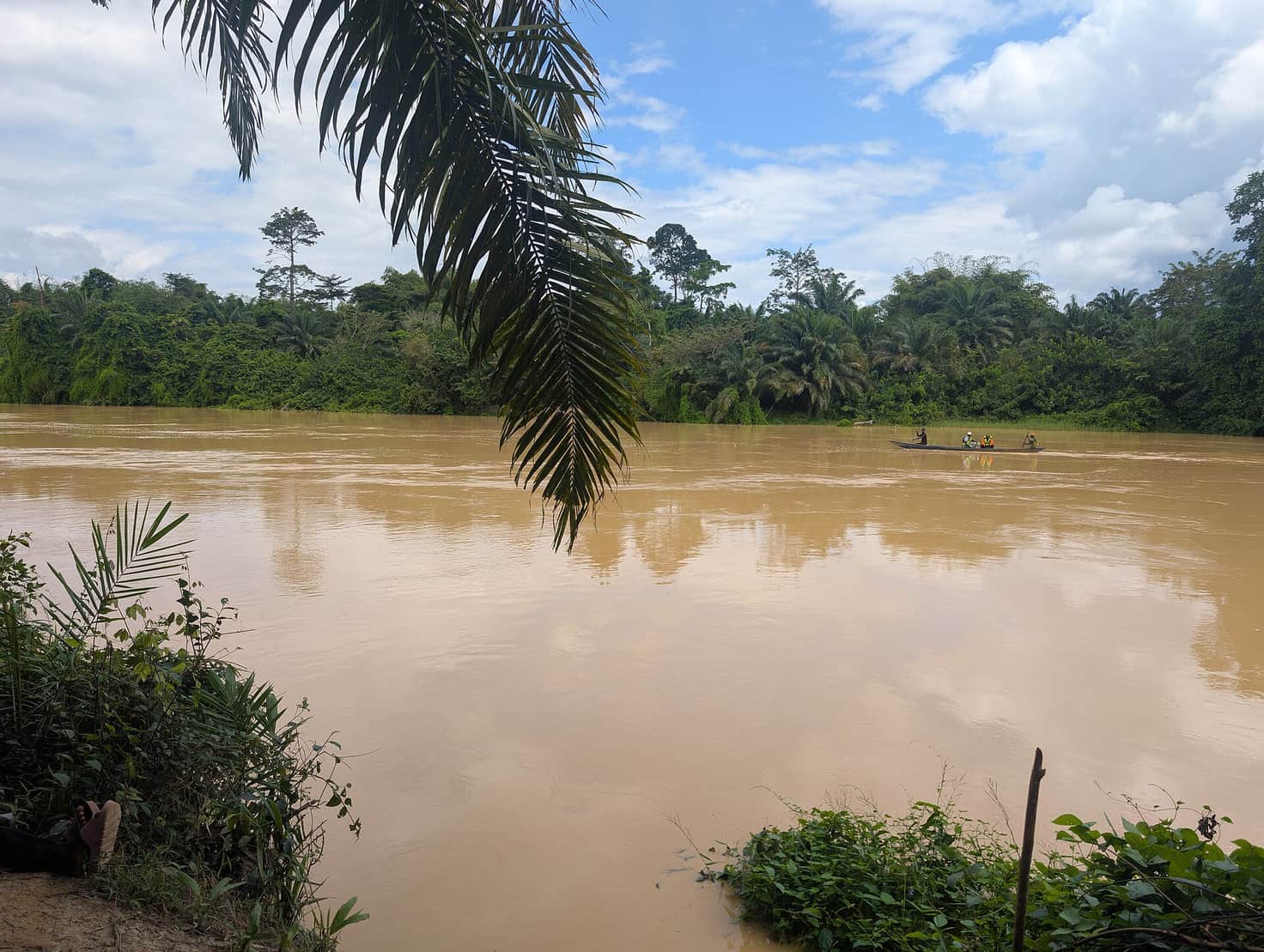
Galamsey and water pollution in Ghana have become two sides of one problem. Illegal small-scale gold mining, carried out in riverbeds, along riverbanks and in the catchments that feed them, has turned rivers that supply drinking water into channels of mud, sediment and toxic metals. The Ghana Water Company has had to suspend treatment at plants where the raw water was too cloudy to treat, and the cost of making water safe has risen. This working paper brings together the published evidence on how that happened, what it costs, what the state has tried, and why the problem has proved so persistent. It argues that the pattern makes most sense when galamsey is seen as a system: the pollution in the water is the visible end of a chain that begins with prices, livelihoods and land, and it will not be broken by enforcement alone.
The paper draws only on published sources: peer-reviewed studies, World Bank analysis, United Nations data, official documents and Afrobarometer surveys. It does not present new field data. Where the evidence is thin or contested, that is said plainly.
What is galamsey, and how big has it become?
Artisanal and small-scale gold mining is old in Ghana. The World Bank's Ghana Country Environmental Analysis (2020) notes that informal gold mining had made the area a major gold producer by the time of the Akan and Adansi kingdoms. "Galamsey" refers to the unlicensed, and therefore illegal, part of that activity; the word is usually traced to the phrase "gather them and sell". The World Bank report draws a useful distinction made by researchers: licensed small-scale mining is legal, while galamsey may have a "social licence" from chiefs or communities but no government permit.
What changed was scale and method. According to the World Bank, galamsey "only increased in intensity and destructiveness when the price of gold skyrocketed following the 2008 global financial crisis", and small-scale production has grown substantially since 2010 "in response to high gold prices, high unemployment, and a slump in agricultural production". The report adds that foreigners and well-off Ghanaians have provided access to capital, enabling the import of advanced machinery. The numbers that exist are rough, but they are large. National galamsey employment is unknown; the World Bank cites estimates of 500,000 to 1.1 million workers, including indirect jobs, and notes that one study identified 7,470 galamsey operations in 312 towns and villages in the Western Region alone, an average of 24 per locality. The same report describes galamsey as an "employment engine" whose reach goes well beyond the people who dig and wash ore: it supports financiers and equipment suppliers, gold buyers, drivers and mechanics, bookkeepers, food sellers and traders. That web of dependent livelihoods is one reason the activity is so resilient.
Small-scale mining is also now a large share of Ghana's gold output. A 2024 study in Heliyon reports that artisanal and small-scale mining, legal and illegal together, contributed 43 per cent of the gold produced in Ghana in 2018 (Bedu-Addo et al., 2024). Figures from the Ghana Chamber of Mines for 2023, as reported by the Ghana News Agency, show small-scale output rising by 70.6 per cent in a single year, from 0.66 million to 1.1 million ounces, while large-scale output fell from 3.1 million to 2.9 million ounces (Figure 1).
These official figures count gold that passes through recorded channels. They cannot say how much of the small-scale total came from licensed rather than illegal operations, and they do not capture gold that leaves the country unrecorded. What they do show is that small-scale gold has become central to Ghana's export economy, which helps explain why the activity is so hard to stop.
How does illegal mining pollute rivers?
Galamsey damages water in three main ways: by moving earth into it, by adding mercury to it, and by releasing other metals that were locked in soils and rock.
The first is the most visible. Gold-bearing gravels lie in and beside rivers, so miners dig the beds and banks of streams, divert channels and wash soil through sluices. The World Bank describes how "streams and rivers were dug up to find gold" over the past decade. Ghana's 2019 amendment to its mining law specifically created an offence of fabricating or using "a floating platform or any other equipment for mining, dredging or obtaining minerals in or along the banks of a natural water body", a sign of how far mining in rivers had spread (Minerals Commission, undated). The result is water loaded with suspended sediment. Turbidity, a measure of how cloudy water is, rises sharply. The World Bank report notes that mining in streams and their tributaries diverts or destroys them, restricts their flow, increases vulnerability to flooding and endangers downstream water use, and it attributes increased turbidity, sediment loading and heavy metal contamination in the Pra and Birim rivers to galamsey. Around Tarkwa in the Western Region, it adds, multiple studies have found water quality unsuitable for human consumption.
Measurements show how extreme this can be. Bedu-Addo and colleagues sampled a 1,000-metre stretch of the River Offin, a galamsey-affected river, and compared the results with the Ghana Environmental Protection Agency's permissible levels for surface water. Mean turbidity was 1,600 nephelometric turbidity units (NTU). The permissible level they used for water intended for drinking is 1 NTU, and for recreation 50 NTU (Figure 2). In their words, turbidity in galamsey-affected rivers "can exceed the permissible turbidity levels for surface water by as much as 1600 times".
The second pathway is mercury. Small-scale miners commonly mix mercury with gold-bearing material to form an amalgam, then heat it to drive the mercury off. Globally, the United Nations Environment Programme estimates that releases of mercury to air, water and land from artisanal and small-scale gold mining represent about 37 per cent of the roughly 2,200 tonnes released each year, making it the sector that demands the most mercury, "with virtually all of the mercury used released to the environment". UNEP estimates that the sector produces about 12 to 15 per cent of the world's gold and involves 10 to 15 million miners, including 4 to 5 million women and children. Ghana's experience is therefore part of a much wider pattern. In rivers, bacteria can transform mercury into methylmercury, which builds up in fish and shellfish. The World Health Organization notes that people are mainly exposed to methylmercury by eating fish and shellfish that contain it, and that mercury may have toxic effects on the nervous, digestive and immune systems, and on lungs, kidneys, skin and eyes. It poses a particular threat to children in the womb and early in life. In Ghana, the World Bank counts about 77 mercury-contaminated sites, largely as a result of gold mining, and notes that when amalgam is burned at home, women and children are exposed to mercury fumes.
The third pathway is the release of other metals. Bedu-Addo and colleagues found arsenic in the River Offin at concentrations far above the permissible levels. Sediments tell a related story. A study of river sediments at 27 sampling points across the Pra Basin, all within or around illegal mining sites, collected samples through the dry and wet seasons of 2017 (Duncan et al., 2018). Metal concentrations were higher in the dry season, when low flows allow metals to settle and accumulate. The authors attributed the high levels of cadmium, lead and chromium found at all sites to unregulated illegal mining, and recorded extreme contamination with nickel and lead at Daboase, which serves as an intake for water treatment. Only one site, Beposo, was classed as polluted overall on their pollution load index. The pattern is uneven: some reaches, including at least one drinking-water intake, are severely affected while others are much less so. The authors call for monitoring of illegal mining and of the metals concerned.
What does it cost to keep the water drinkable?
The most immediate cost falls on water treatment. Conventional treatment plants are designed for raw water within a certain range of turbidity. When the incoming water is far beyond that range, plants must use more chemicals, cut production or stop altogether. Bedu-Addo and colleagues report that the Kibi, Daboase and Odaso treatment plants of the Ghana Water Company Limited "had to suspend operations" because of extremely high turbidity linked to galamsey, with values in the range of 1,261 to 3,842 NTU recorded. The World Bank notes that the company has had to shut down treatment operations several times since 2011, including on the Birim, where pollution was too high for water to be treated for household use. It adds that the cost of water provision rises as plant maintenance becomes more expensive and communities are forced to dig new wells. Where there are no alternatives, the report observes, miners and communities may continue to rely on contaminated water for their daily needs.
The wider costs are larger. The World Bank estimated the total cost of environmental degradation in Ghana at about US$6.3 billion a year, equivalent to 10.7 per cent of 2017 GDP, with water pollution alone causing damage equivalent to about 3 per cent of GDP. That water figure covers far more than mining, including poor sanitation and industrial effluent. For mining specifically, the report estimates the annual cost of mercury exposure linked to small-scale gold mining at US$240 million, or 0.4 per cent of 2017 GDP, and cites an estimate that US$250 million would be needed just to restore lands and water bodies destroyed by galamsey in the Western Region.
Costs also fall on livelihoods that depend on land and water. The World Bank notes that the destruction of farmland in galamsey areas has raised food security concerns, including higher prices for staple crops, and that galamsey is a likely contributor to poorer cocoa health and yields. Some forest reserves in the high forest zone saw as much as a twelve-fold increase in galamsey between 2011 and 2015, and reserves that escaped direct encroachment still suffered when polluted water flowed through them from upstream. Bedu-Addo and colleagues list the losses to "ecosystem services": fewer fish, oysters and snails, less raw water of usable quality, higher treatment costs, and the loss of recreational and cultural uses of rivers.
How polluted are Ghana's rivers overall?
National indicators give a more mixed picture than the worst local measurements. Under Sustainable Development Goal 6, countries report the share of their monitored water bodies that have good ambient water quality. Ghana's reported value for 2023 was 83 per cent, both for water bodies overall and for rivers specifically (UN SDG Global Database). On its face, this suggests that most monitored waters are in good condition.
The two pictures are not necessarily in conflict. The indicator covers the water bodies that are monitored and a limited set of core parameters; it is a national summary, not a map of the worst-affected reaches. A river can pass a national index on average while specific stretches below mining sites are, at times, too turbid to treat. The difference matters for policy. National averages can make the problem look manageable; plant shutdowns show that, for the people served by those plants, it is acute. A water-first response would need monitoring that is fine-grained enough to show where and when the damage occurs, and published so that communities, water utilities and regulators work from the same evidence.
How did the law shape the problem?
Galamsey is often described simply as lawbreaking, but the legal framework itself has shaped who mines legally and who does not. The World Bank's account of mining policy is instructive. The 1986 Minerals and Mining Law (PNDCL 153), designed to attract foreign capital into the sector, established that the government alone is responsible for granting mineral rights. Laws passed in 1989 then tried to bring small-scale mining into the formal system. The Small-Scale Mining Law, since repealed, legalised small-scale mining and allowed small-scale miners to apply for mineral rights; it was written, the report notes, to placate local communities who felt that the policy framework had deprived them of mineral rights over their own lands. The 1989 Mercury Law lifted a ban on mercury use that had been in place since the colonial era, permitting licensed miners to buy "reasonable amounts" from authorised dealers. A state company, the Precious Minerals Marketing Company, was given the role of buying gold from licensed small-scale miners through appointed agents.
Later amendments moved towards punishment. The Minerals and Mining (Amendment) Act, 2015 (Act 900) stiffened fines and sentences and provided for the confiscation of equipment, and Act 995 in 2019 went further, as described below. Meanwhile, the way mineral revenues are shared has given affected communities little stake in the outcome. The World Bank found that mining communities receive only four per cent of mineral rent, with government and traditional authorities receiving larger shares, and that citizen participation in budgeting royalties was weak to non-existent.
The result is a system in which the land beneath a farming community can be allocated to others by the state, the legal route for local miners is narrow, mercury use is legal for licensed operators, and the communities that live with the damage see little of the revenue. None of this excuses illegal mining, but it helps explain why many people regard it as legitimate, and why enforcement alone meets resistance.
What has the state tried, and what happened?
Government responses since 2017 have combined suspension, enforcement and attempts at formalisation.
A ban. The government prohibited artisanal and small-scale mining operations from 2017 to 2018 to address the social and environmental problems caused by illegal mining. One of the few studies to test the effect on drinking-water sources used fourteen years of data (2006 to 2019) from the Konongo Water Treatment Plant, which draws on the Anuru River. Before the ban, colour, turbidity, temperature, total iron and sulphate in the raw water showed statistically significant upward trends. After the ban, there was a statistically significant downward trend in turbidity and several other measures (Bawa et al., 2022). The ban worked, at least for that river, while it held.
Heavier penalties. In 2019 Parliament passed the Minerals and Mining (Amendment) Act, 2019 (Act 995). According to the Minerals Commission, it widened the definition of illegal mining to cover any mining without a licence or valid authority, raised the penalty for illegal small-scale mining from a maximum of five years' imprisonment to a minimum of 15 and a maximum of 25 years, with fines of 10,000 to 15,000 penalty units, and created new offences for supplying excavators and for using floating platforms to mine in or along rivers. On conviction, courts must order seized equipment and minerals forfeited to the state (Minerals Commission, undated).
A route to legal mining. Also in 2019, the government launched the Community Mining Scheme, which aimed to ring-fence specific areas for licensed small-scale mining, ensure that mining communities owned the concessions, and set up district mining committees for monitoring. The new government led by the National Democratic Congress has since disbanded the scheme and proposed to replace it with "mining cooperatives" (Ofosu and Arthur-Holmes, 2025).
The record suggests a pattern. Enforcement can bring quick improvements, as the Konongo data show, but when it eases the activity returns, because the reasons people mine have not changed. Researchers have repeatedly pointed to three obstacles to legal mining: the rigid bureaucracy that must be navigated to obtain a licence, the high cost of permits, and an acute shortage of mineralised land available to prospective small-scale licensees (Ofosu and Arthur-Holmes, 2025, citing earlier studies). Ofosu and Arthur-Holmes also cite an estimate that over 85 per cent of small-scale mining operators extract illegally. When the legal route is narrow and slow, and gold prices are high, illegal mining remains the rational choice for many households, and for the investors who finance machinery.
What do Ghanaians think?
Public opinion has been consistently against galamsey and in favour of stronger action, while also recognising that miners need other ways to earn a living. In Afrobarometer's 2017 survey, 74 per cent of Ghanaians said people should not engage in illegal small-scale mining "for any reason", 81 per cent approved of the government's performance in clamping down on it, and 80 per cent approved of the idea that the government should be responsible for providing alternative livelihoods for former miners (Armah-Attoh, 2017). Rejection of galamsey was strongest in Central (92 per cent), Brong Ahafo (87 per cent) and Ashanti (79 per cent) regions, and weakest in Upper East (45 per cent).
By 2022, concern had broadened to pollution and natural resource extraction in general (Figure 3). Almost two-thirds of Ghanaians (64 per cent) said pollution was a somewhat or very serious problem in their community; 82 per cent said the government should be doing more to limit pollution and protect the environment; and 85 per cent wanted natural resource extraction regulated more tightly. Only 39 per cent said the benefits of extraction, such as jobs and revenue, outweighed its negative impacts (Sarpong Owusu and Amoah Twum, 2023).
These results suggest that there is a broad public mandate for action, and that the public sees the problem in terms of both protection and livelihoods.
Why has the problem proved so hard to solve?
Bedu-Addo and colleagues analyse galamsey using the Driver–Pressure–State–Impact–Response (DPSIR) framework, which traces an environmental problem from its causes to its effects and back to the policies that try to address it. Figure 4 applies that framework to the evidence reviewed here.
- DriversHigh gold prices after 2008, unemployment and a slump in farming; costly, slow licensing and little mineralised land available to small-scale miners; outside capital for machinery.
- PressuresDigging in rivers, streams and their banks; excavators and floating dredging platforms; mercury used to recover gold.
- State of the waterVery high turbidity and suspended sediment; mercury and arsenic above permissible levels; metals in river sediments.
- ImpactsTreatment plants forced to suspend operations; higher treatment costs; health costs of mercury exposure; damaged farmland, fisheries and cocoa.
- ResponsesA ban on small-scale mining (2017–2018); heavier penalties under Act 995 (2019); the Community Mining Scheme (2019), since replaced by plans for mining cooperatives (2025).
The diagram follows the Driver–Pressure–State–Impact–Response framework used by Bedu-Addo et al. (2024). Responses feed back on drivers and pressures: when they leave the drivers untouched, the pressures return.
Source: RFI, drawing on World Bank (2020), Bedu-Addo et al. (2024), Ofosu and Arthur-Holmes (2025) and the Minerals Commission.
Read this way, the policy story of the last decade has concentrated on the right-hand end of the chain. Bans and penalties act on the pressures: they try to stop digging and dredging. They do much less about the drivers, which are economic and institutional. High gold prices, unemployment and weak farm incomes keep the incentive to mine strong, while a licensing system that is slow, costly and short of available land keeps much of that mining outside the law. When enforcement relaxes, the pressures return, and the water deteriorates again.
The framework also helps explain why water is so exposed. Rivers sit downstream of everything. Damage done in one place is paid for elsewhere: by a treatment plant further down the river, by a cocoa farmer whose land floods with sediment, by a fishing community, or by a city whose supply is cut. The people who bear the costs are often not the people who make the decisions about mining, and the costs arrive later than the gold income. This is precisely the kind of separation of causes from consequences that a relational approach to policy tries to bring back into view.
What would a water-first response involve?
The evidence points to several directions. They are offered as implications of the published research, not as tested solutions.
Treat water security as the organising goal. Licensing, enforcement and formalisation can all be judged by one test: do they keep rivers treatable? That would mean defining protected zones along rivers and above water intakes where no mining is permitted, and prioritising enforcement there.
Publish water-quality data that people can use. The Konongo study was possible only because the treatment plant kept long-term raw water records. Regular public reporting of turbidity and key metals at treatment intakes and along mining-affected rivers would let communities, utilities and regulators see where pollution is happening and whether responses are working, at a finer scale than national indicators allow.
Make the legal route workable. If most small-scale miners operate illegally because licences are slow, expensive and land is scarce, then reducing those barriers, while attaching clear environmental conditions and supervision, is likely to do more than penalties alone. The shift from the Community Mining Scheme to mining cooperatives is an opportunity to learn from what the earlier scheme did and did not achieve; Ofosu and Arthur-Holmes call for research into how far the scheme grew and the challenges it faced, to inform the new cooperatives.
Reduce mercury at the point of use. Because virtually all the mercury used in small-scale mining ends up in the environment, support for mercury-free gold recovery in licensed operations would cut one of the most persistent long-term harms.
Fund restoration. The World Bank's estimate of US$250 million to restore damaged land and water in the Western Region alone shows that restoration is a major public cost. Linking mining revenues and penalties to restoration would make that cost visible in mining decisions.
Keep livelihoods in view. Public support for alternative livelihoods, shown in the 2017 Afrobarometer results, reflects an understanding that many miners mine because they have few better options. Responses that offer realistic alternatives are more likely to hold.
What are the limits of this paper?
This is a review of published evidence, not a field study. The measurements cited come from particular rivers and periods, and pollution varies greatly between places and seasons. Some of the most widely repeated figures about galamsey, such as the share of water bodies said to be polluted, could not be traced to a primary source we could verify, and have been left out. Official production figures cannot distinguish legal from illegal small-scale gold. The DPSIR diagram is an interpretive tool: it organises the evidence but does not prove causation. Further work is needed, above all on long-term water-quality records at treatment intakes and on what happens to water quality after enforcement campaigns end.
Conclusion
The story of galamsey and water pollution in Ghana is not only a story of illegal miners and failing enforcement. It is a story of incentives that make mining in rivers attractive, legal routes that are hard to use, and costs that flow downstream to people who had no say in the decisions that caused them. Short-term crackdowns have shown that rivers can recover when the digging stops. Lasting recovery will depend on changing the conditions that bring the digging back, and on measuring, openly and continuously, whether the water that Ghanaians drink is getting cleaner.